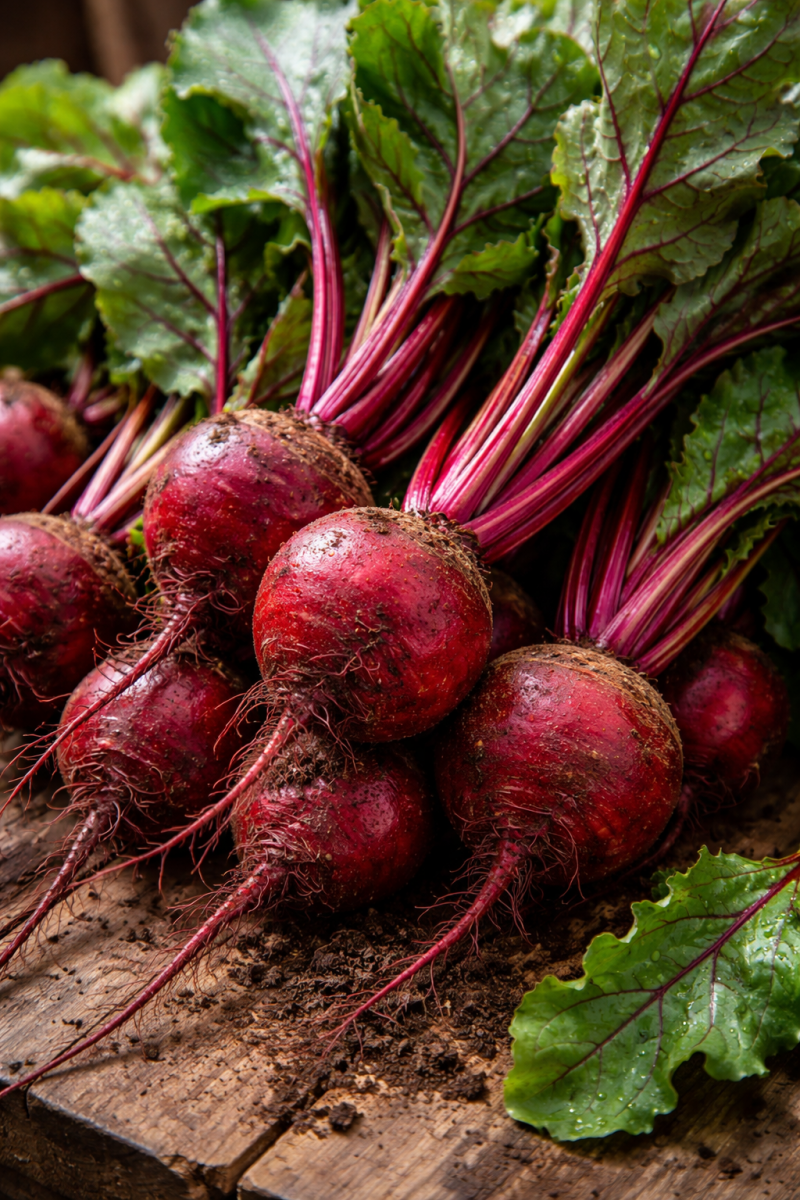
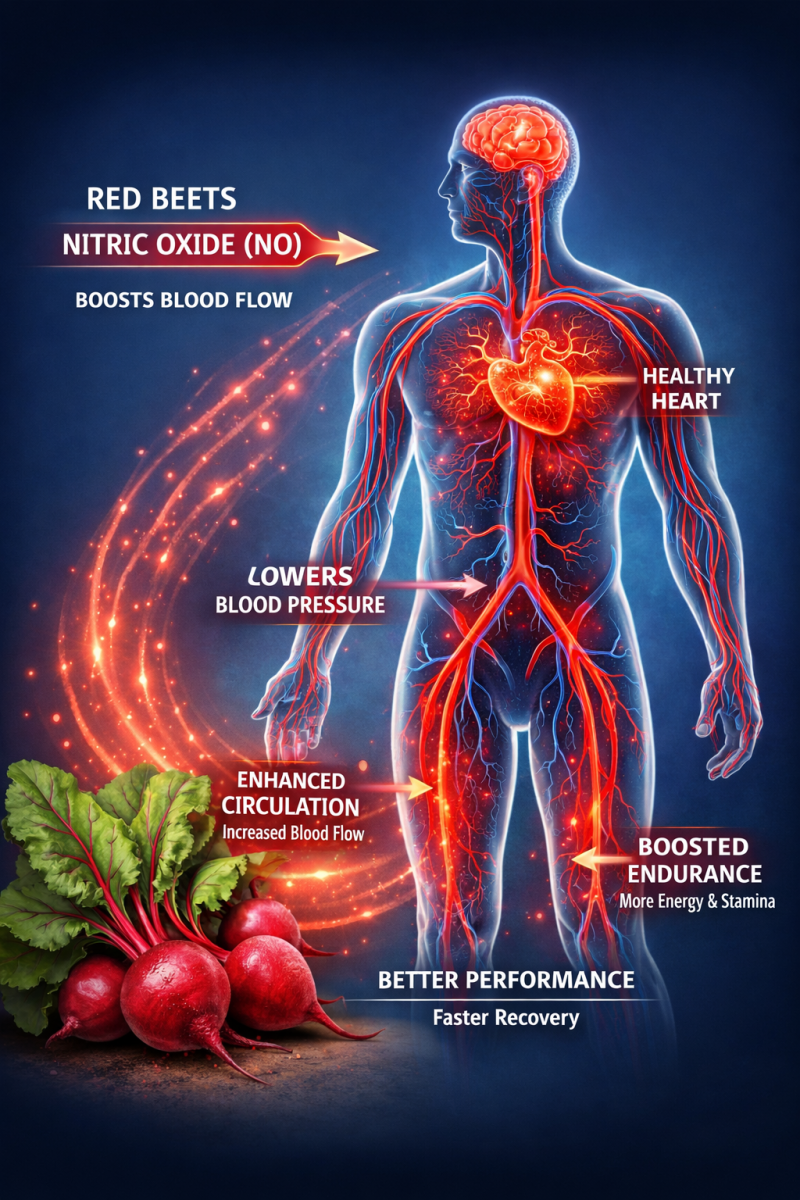
“Red beets boost nitric oxide, improving circulation and heart health.”
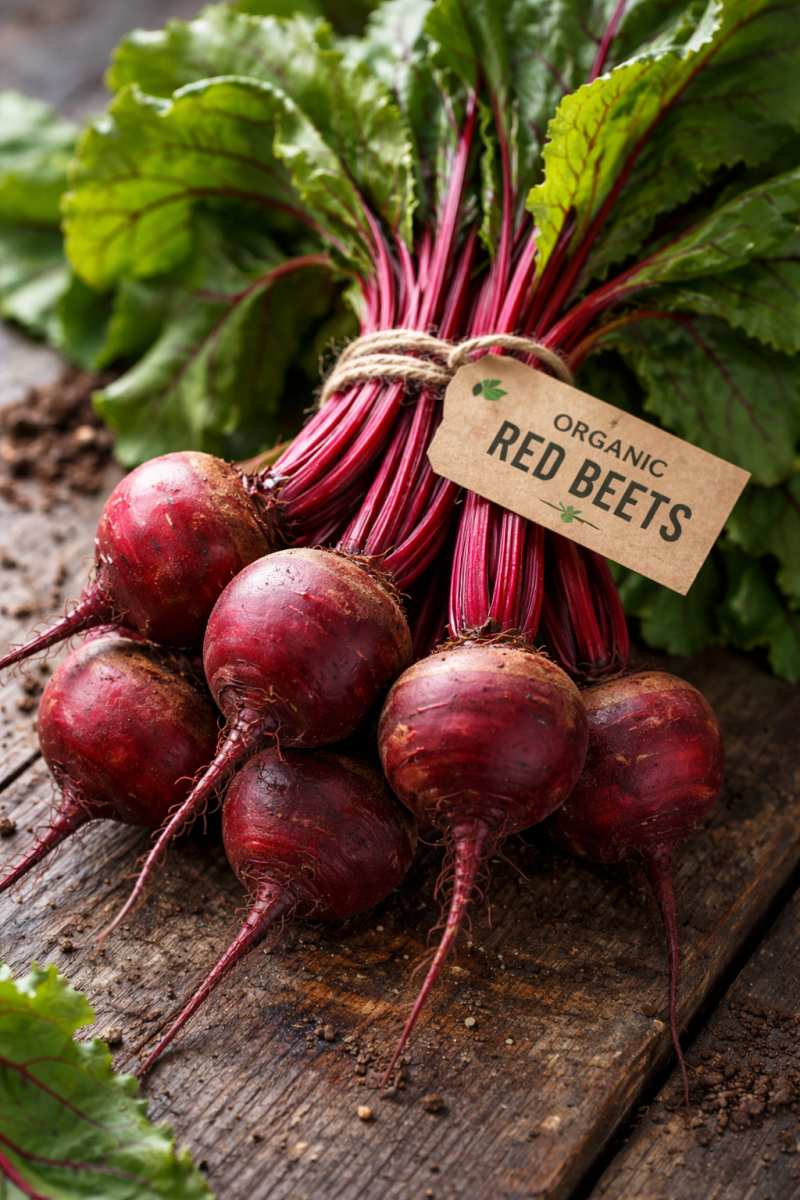
The Crimson Key: How Red Beets Unlock Circulation, Oxygenation, and Vascular Power
There is a quiet revolution happening beneath the surface of human physiology—one not driven by synthetic compounds or invasive interventions, but by a simple, ancient root pulled from the earth: the red beet.
At first glance, the beet appears humble. Deep crimson. Slightly sweet. Earthy. But within this unassuming structure lies one of nature’s most potent biochemical keys to vascular health, performance, and longevity—nitric oxide.
The Hidden Currency of Circulation: Nitric Oxide
Nitric oxide (NO) is not a trend—it is a foundational signaling molecule, a master regulator of vascular tone, oxygen delivery, and cellular communication. Every heartbeat, every contraction, every moment of clarity depends on its presence.
Nitric oxide governs:
Vasodilation – the widening of blood vessels
Oxygen delivery to tissues and organs
Mitochondrial efficiency and energy production
Blood pressure regulation
Neurovascular coupling (brain performance and clarity)
Yet here lies the paradox: as we age, experience stress, consume processed foods, and accumulate environmental burdens, nitric oxide production declines. Blood vessels stiffen. Circulation becomes restricted. Pressure rises. Energy falls.
The body, in essence, begins to lose its fluidity.
Enter the Beet: Nature’s Nitric Oxide Reservoir
Red beets are among the most concentrated natural sources of dietary nitrates—the raw materials the body converts into nitric oxide through a beautifully orchestrated biological cascade.
The pathway is elegant:
Dietary nitrates (NO₃⁻) from beets are absorbed
Oral bacteria convert them into nitrites (NO₂⁻)
Nitrites are further reduced into nitric oxide (NO) in the bloodstream
This is not pharmacology. This is physiology—aligned with nature. And when this pathway is supported, the results are profound.
Blood Pressure: A Natural Rebalancing
Elevated blood pressure is not merely a number—it is a reflection of resistance within the vascular system. Constricted vessels. Impaired signaling. Loss of elasticity.
By increasing nitric oxide availability, red beets initiate:
Smooth muscle relaxation within blood vessels
Reduced vascular resistance
Improved endothelial function
The result? A measurable, natural reduction in blood pressure—often within hours of consumption. This is not suppression. This is restoration.
Circulation: Restoring the River of Life
When nitric oxide levels rise, blood flow transforms.
Instead of turbulent, restricted movement, circulation becomes:
Efficient – delivering nutrients with precision
Expansive – reaching peripheral tissues often deprived
Responsive – adapting dynamically to the body’s needs
For the athlete, this means enhanced endurance, faster recovery, and greater output.
For the individual seeking wellness, it means warmth in the extremities, clarity in the mind, and vitality in motion.
Circulation is not just movement—it is communication. And nitric oxide is its language.
Beyond Nitrates: The Synergistic Intelligence of the Beet
Red beets are not a one-note instrument. They are a symphony of synergistic compounds working in concert:
Betalains
Powerful antioxidants responsible for the beet’s deep crimson hue. They combat oxidative stress and inflammation—two key drivers of vascular dysfunction.
Potassium
An essential mineral that helps regulate fluid balance and counteracts refined sodium’s hypertensive effects.
Folate (Vitamin B9)
Supports methylation pathways and cardiovascular integrity.
Polyphenols
Enhance endothelial resilience and protect against cellular damage.
Together, these compounds amplify the nitric oxide effect, creating a multi-dimensional restoration of vascular health.
The Oral Microbiome: An Overlooked Gatekeeper
One of the most fascinating aspects of nitric oxide production is its reliance on the oral microbiome.
Antibacterial mouthwashes—commonly used in modern hygiene—can disrupt this critical conversion of nitrates to nitrites, effectively shutting down a key pathway of nitric oxide synthesis.
In other words, the very act intended to promote cleanliness may inadvertently impair circulation.
True health is not eradication—it is balance.
Performance, Longevity, and the Return to Biological Intelligence
For those seeking peak performance—whether in sport, cognition, or daily life—red beets offer a legal, natural, and highly effective enhancement.
Studies have demonstrated:
Increased VO₂ max (oxygen utilization)
Delayed fatigue thresholds
Enhanced muscle efficiency
Improved recovery dynamics
But beyond performance lies something deeper: longevity through optimization.
When blood flows freely, when oxygen reaches every cell, when the vascular system operates without resistance—the body begins to function as it was designed.
Not forced. Not stimulated. But restored.
Practical Application: Harnessing the Power
To access the benefits of red beets:
Fresh beet juice (8–16 oz) for rapid nitric oxide elevation
Beet powder for convenience and concentration
Whole roasted or steamed beets for sustained nourishment
For maximum effect:
Consume regularly
Avoid antibacterial mouthwash before and after intake
Pair with a nutrient-dense, whole-food lifestyle
Consistency transforms potential into reality.
Final Word: The Simplicity of Power
In a world searching for complexity, the answer often returns to simplicity.
The red beet does not impose—it supports.
It does not override—it restores.
It does not force—it facilitates.
Through nitric oxide, it reawakens one of the body’s most essential systems: the ability to flow.
And in that flow lies energy.
In that flow lies balance.
In that flow lies life.
"The question is not whether the body knows how to heal—the question is whether we are willing to give it what it needs."