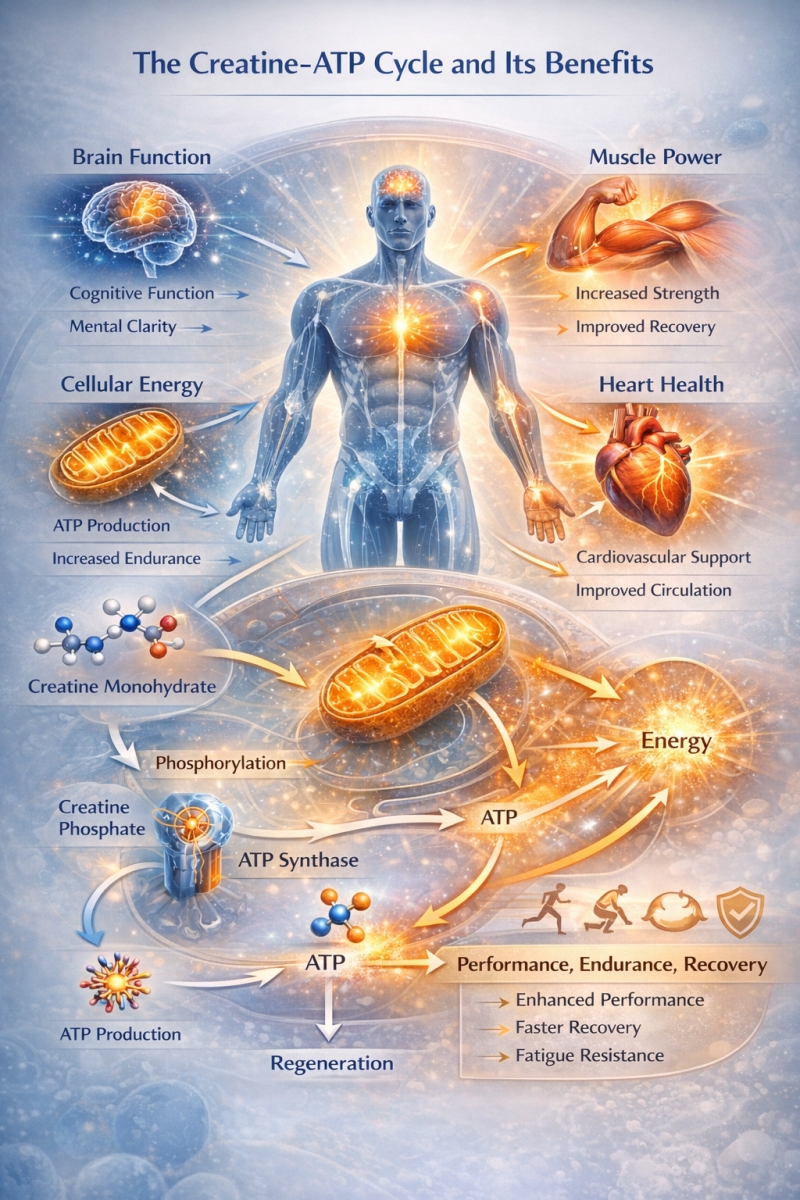
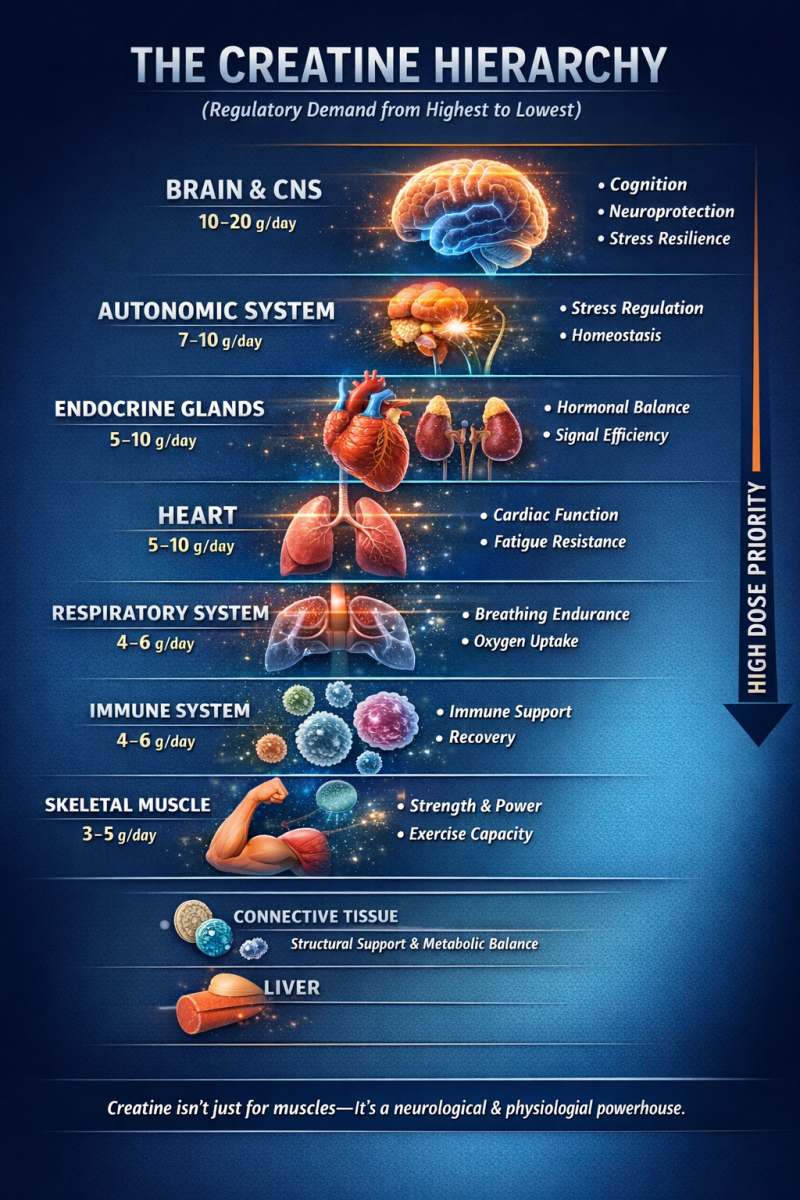
"Creatine monohydrate fuels ATP, sustaining life’s highest performance demands."
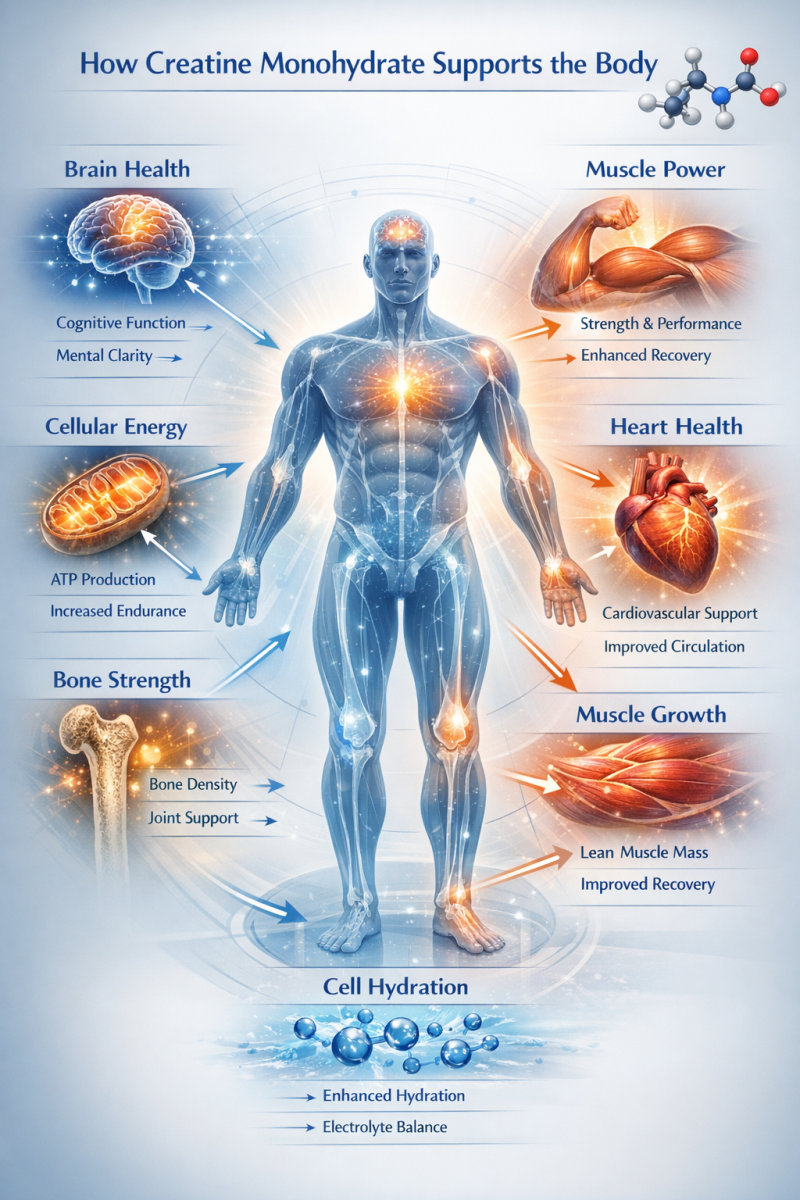
⚡️🔋Creatine Monohydrate: The Cellular Powerhouse Rewriting the Future of Healing
There are few compounds in human physiology as profoundly misunderstood—and yet as deeply foundational—as ⚡️🔋creatine monohydrate. Often dismissed as merely a “gym supplement,” creatine is, in truth, one of the most biologically essential molecules for life, energy, and recovery—particularly in the brain and nervous system.
To reduce creatine to muscle performance is to overlook its far greater role: it is the guardian of cellular energy, the protector of neurological integrity, and a critical ally in states of disease, degeneration, and fatigue.
This is not hype. It is physiology.
The Essence of Creatine: Energy at the Speed of Life
At its core, creatine is a naturally occurring compound synthesized from amino acids—primarily glycine, arginine, and methionine. It exists in a dynamic relationship with phosphocreatine, forming one of the body’s most important energy systems.
Inside every cell—especially in tissues with high energy demand like the brain and muscles—creatine serves as a rapid energy buffer. It regenerates ATP (adenosine triphosphate), the body’s universal energy currency, in milliseconds.
This system is known as the creatine kinase / phosphocreatine system, and its function is simple but profound:
When energy demand spikes, ATP is depleted
Phosphocreatine donates a phosphate group
ATP is instantly regenerated
This is life at the cellular level—energy restored in real time.
Without this system, the brain cannot think, the heart cannot beat efficiently, and cells cannot repair themselves.
The Brain: Where Creatine Becomes Critical
The human brain accounts for only ~2% of body weight—yet consumes about 20% of total energy output.
This disproportionate demand makes the brain exquisitely sensitive to energy deficits.
When energy falters:
Neurons misfire
Synaptic communication degrades
Oxidative stress rises
Inflammation accelerates
Cognitive clarity declines
Creatine steps in as a biological stabilizer.
Research demonstrates:
Increased brain creatine enhances memory and executive function
Supplementation improves cognition under stress (e.g., sleep deprivation)
Elderly individuals show improved verbal and spatial memory
Low-creatine populations (e.g., vegetarians) experience significant cognitive gains
This is not incidental—it is foundational. Creatine is not just fuel. It is neurological resilience.
Creatine and Neurological Disease: A Metabolic Lifeline
Virtually every neurological disorder shares a common thread: Impaired cellular energy metabolism
This includes:
Alzheimer’s disease
Parkinson’s disease
ALS
Huntington’s disease
Cognitive decline
Creatine directly targets this dysfunction.
By restoring cellular energy capacity, it helps:
Stabilize mitochondrial function
Reduce oxidative stress
Support neuronal survival
Enhance cognitive processing
Emerging research continues to explore its therapeutic role across these conditions, precisely because it addresses the root energetic failure underlying neurological disease.
Traumatic Brain Injury (TBI): Creatine as Neuroprotection
Few areas reveal creatine’s potential more dramatically than traumatic brain injury.
After a TBI, the brain enters what can only be described as an energetic crisis:
ATP production collapses
Mitochondria become dysfunctional
Calcium floods neurons
Free radicals surge
Tissue begins to degenerate
Creatine intervenes at the most critical level—energy restoration.
What the research shows:
Animal studies demonstrate up to 50% reduction in brain damage when creatine is present prior to injury
Supplemented animals show less cortical damage and preserved brain tissue
Creatine supports mitochondrial stability and reduces secondary injury cascades
It may act as a neuroprotective buffer before and after injury
A 2025 clinical review highlights the growing rationale for creatine as a therapeutic strategy in TBI, emphasizing the urgent need for metabolic support in recovery.
This is profound:
Creatine does not “treat symptoms.”
It fortifies the brain’s ability to survive energy collapse.
Chronic Fatigue: The Hidden Energy Crisis
Chronic fatigue—whether labeled as chronic fatigue syndrome, post-viral fatigue, or systemic burnout—is fundamentally an energy deficiency at the cellular level.
Mitochondria fail to produce adequate ATP.
Cells cannot sustain function.
The organism slows down.
Creatine offers a direct countermeasure:
Enhances ATP regeneration
Reduces perceived fatigue
Improves muscular and cognitive endurance
Supports recovery under metabolic stress
Even in healthy individuals, creatine improves performance under stress and sleep deprivation—conditions that mirror the metabolic strain seen in chronic fatigue states.
For those living in a constant state of depletion, creatine is not optional—it is strategic restoration.
Beyond Muscle: Whole-Body Intelligence
While 90–95% of creatine is stored in muscle, its influence extends far beyond physical strength.
System-wide benefits include:
1. Cellular Hydration & Integrity
Creatine draws water into cells, enhancing cellular volume and stability—key for tissue resilience.
2. Anti-Oxidative Effects
Reduces reactive oxygen species, protecting cells from damage.
3. Metabolic Support
Improves glucose handling and may support insulin sensitivity.
4. Aging & Longevity
Supports muscle preservation, brain function, and mitochondrial health—three pillars of healthy aging.
5. Cognitive Endurance
Enhances focus, mental clarity, and resistance to cognitive fatigue.
Safety, Simplicity, and Biological Compatibility
⚡️🔋Creatine monohydrate is one of the most extensively studied supplements in human history.
Typical maintenance dose: ~3–5 grams daily
Long-term studies show no significant health risks in healthy individuals
Naturally produced by the body and obtained through food
Highly bioavailable and cost-effective
This is not a foreign compound.
It is a native molecule, restored.
A Paradigm Shift in Healing
What makes creatine so powerful is not just what it does—but where it acts.
It operates at the intersection of:
Energy
Structure
Function
Adaptation
In a world where most interventions chase symptoms, creatine addresses the energetic foundation of life itself.
Final Perspective: The Forgotten Essential
⚡️🔋Creatine monohydrate represents a profound truth in human biology:
Healing is not merely biochemical—it is bioenergetic.
For individuals facing:
Neurological compromise
Chronic fatigue
Traumatic brain injury
Degenerative disease
Creatine is not simply a supplement.
It is:
A stabilizer of energy
A protector of the brain
A catalyst for recovery
"And perhaps most importantly—a return to the fundamental principle that life thrives where energy flows."
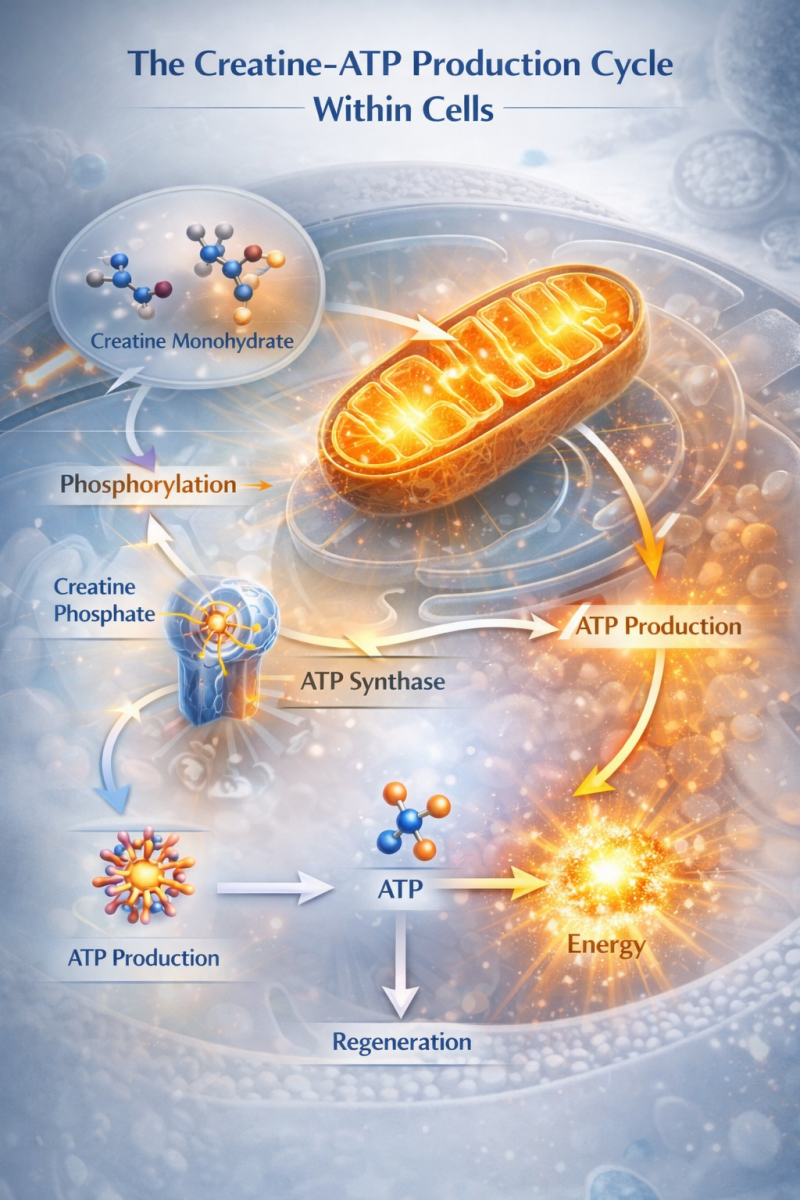
⚡️🔋Creatine Monohydrate: The Master Regulator of Cellular Energy and the Foundation of Human Function
Beneath every heartbeat, every thought, every contraction, and every act of healing lies a singular requirement: energy.
Not vague vitality. Not abstract wellness.
But precise, measurable, immediate energy—ATP (adenosine triphosphate)—the currency of life itself.
And standing at the gateway of this energy economy is one of the most powerful, yet overlooked compounds in human physiology:
⚡️🔋Creatine monohydrate.
The ATP Imperative: Life Runs on Instant Energy
Every cell in the human body depends on ATP to function. However, there is a critical limitation:
The body stores only a few seconds’ worth of ATP at any given time.
This means survival depends not just on producing ATP—but on regenerating it instantly, continuously, and efficiently.
That is the role of creatine.
At the heart of this system is a rapid biochemical exchange:
This reaction occurs in fractions of a second, buffering energy demand and preventing collapse at the cellular level.
Creatine: The First Responder of Energy Systems
The body has multiple ways to generate ATP—but they are not equal in speed.
Oxidative metabolism (mitochondria): powerful but slower
Glycolysis: intermediate
Creatine (phosphagen system): immediate and dominant in the first seconds of demand
Before oxygen delivery increases…
Before glucose is broken down…
Creatine is already restoring ATP.
It is the shock absorber of energy, ensuring that no system fails when demand spikes.
The Organs and Tissues That Depend on Creatine
Creatine is not optional for high-energy tissues—it is foundational. Its highest concentrations exist where energy turnover is relentless and non-negotiable.
🧠 Brain and Central Nervous System
The brain is one of the most energy-demanding organs in the body.
Creatine supports:
Neuronal firing and synaptic transmission
Maintenance of ion gradients (essential for nerve impulses)
Cognitive clarity, memory, and focus
Protection against metabolic stress and fatigue
Without sufficient creatine:
Brain energy becomes unstable
Cognitive performance declines
Neurological resilience weakens
❤️ Heart (Cardiac Muscle)
The heart never rests. It beats approximately 100,000 times per day.
Creatine is critical for:
Sustaining continuous ATP turnover
Supporting contractile force
Maintaining rhythm stability
Low creatine availability compromises cardiac efficiency and endurance.
💪 Skeletal Muscle
While commonly associated with strength, the deeper truth is energy regulation.
Creatine:
Fuels rapid contraction
Delays fatigue
Enhances recovery and repair
Maintains intracellular hydration and structural integrity
It is not just about performance—it is about functional capacity.
🧬 Mitochondria (Cellular Powerhouses)
Creatine acts as an energy shuttle between mitochondria and areas of high demand within the cell.
It:
Transports high-energy phosphate groups
Buffers fluctuations in ATP levels
Stabilizes mitochondrial function
Without this system, energy distribution becomes inefficient and chaotic.
🩸 Endocrine Glands (Energy-Sensitive Regulators)
Thyroid Gland
Regulates metabolic rate. Creatine supports the ATP required for hormone synthesis and cellular responsiveness.
Adrenal Glands
Responsible for stress adaptation. Creatine helps sustain energy output during acute and chronic stress states.
Pancreas
Involved in insulin secretion. ATP-dependent signaling is essential for proper glucose regulation.
🫁 Lungs and Respiratory Muscles
Breathing is an energy-dependent process.
Creatine supports:
Diaphragm contraction
Respiratory endurance
Oxygen exchange efficiency (indirectly through energy stability)
🧫 Immune System
Immune cells require rapid bursts of energy to:
Identify pathogens
Proliferate
Mount defense responses
Creatine enhances:
Cellular activation
Immune responsiveness
Resistance to fatigue during prolonged immune stress
🧠 Peripheral Nervous System
Every signal traveling through the body—from brain to muscle, organ to organ—depends on ATP.
Creatine ensures:
Signal fidelity
Speed of transmission
Resistance to neurological fatigue
Creatine and Peak Performance: Beyond Survival
There is a difference between functioning and thriving.
Creatine bridges that gap.
In Peak States, It Enables
Explosive strength and power
Sustained mental clarity
Faster recovery between efforts
Greater resilience under stress
Enhanced adaptability of the entire organism
It allows the body to operate not just adequately—but optimally under pressure.
In Disease and Dysfunction: A Critical Lifeline
Many chronic conditions share a common root:
Impaired cellular energy metabolism
This includes:
Chronic fatigue states
Neurological disorders
Post-viral syndromes
Traumatic brain injury
In these conditions:
ATP production is compromised
Mitochondria become inefficient
Cells enter an energy-deficient state
Creatine becomes:
A buffer against collapse
A restorer of ATP balance
A protector of cellular integrity
It does not merely enhance function—it preserves it when it is under threat.
The Modern Deficiency: Why Creatine Matters More Than Ever
Creatine is obtained from:
Red meat and fish
Endogenous synthesis (liver, kidneys)
However, modern factors reduce availability
Low intake of animal proteins
Increased metabolic stress
Environmental and physiological burdens
High cognitive demand lifestyles
The result?
A growing population operating in a suboptimal energy state.
Final Perspective: The Energy Principle of Life
⚡️🔋Creatine monohydrate represents a fundamental biological truth:
Where energy is unstable, function deteriorates.
Where energy is restored, life returns.
It is not merely a supplement for athletes. It is a central regulator of human physiology.
"From the brain to the heart, from glands to muscles, from healing to peak performance. Creatine is the silent force ensuring that ATP is always available when life demands it most."